
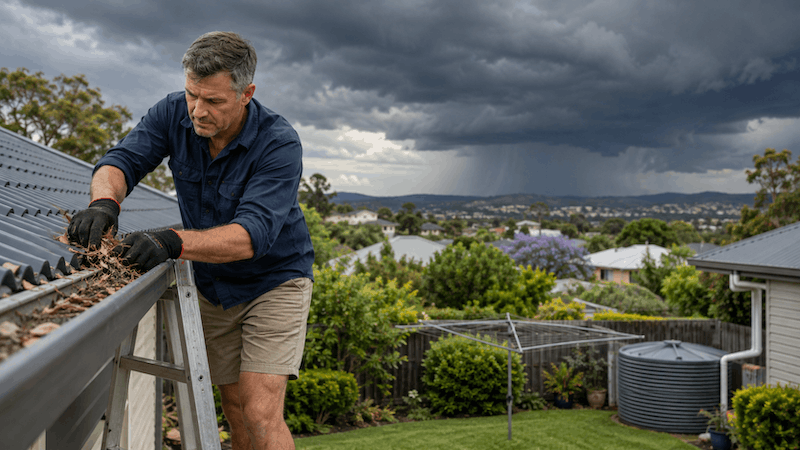
Severe weather rarely arrives at a convenient time. The jobs that are easy on a clear weekend — clearing a blocked gutter, trimming a problem branch or fixing a loose section of roof — become much harder once a storm warning is already on the radar.
Toowoomba Regional Council and Queensland emergency-preparation guidance consistently emphasise the same basics: keep the roof in good condition, clear gutters and downpipes, trim trees and overhanging branches, and secure loose outdoor items. Those are simple jobs, but they address some of the most obvious ways wind and heavy rain can damage a property.
Start with the roof and gutters
Look for damaged or loose roofing, cracked guttering, blocked downpipes and places where water does not drain as expected. You do not need to climb onto a roof to do a useful check; many problems can be spotted from the ground or by a qualified contractor.
If the roof needs repair, organise it before severe weather is forecast. Likewise, gutters full of leaves and debris can overflow during heavy rain instead of directing water away from the building.
Check trees before the wind does it for you
Walk around the property and look for dead limbs, branches close to the house and trees that may need professional assessment. Do not attempt work around powerlines. Queensland guidance specifically recommends contacting the relevant council or electricity distributor where trees threaten power infrastructure.
For larger trees or work requiring climbing, use an appropriately skilled tree professional rather than turning storm preparation into a separate safety problem.
Think about where water will go
Heavy rain exposes drainage problems quickly. Check that downpipes discharge properly, surface drains are not blocked and garden beds or landscaping are not directing water back towards the house.
If you already know of a slow stormwater drain, recurring pooling or a leak that appears in heavy rain, address it while the weather is dry. Plumbing, drainage and landscaping businesses may each play a role depending on the cause.
If the issue needs a contractor, our plumber guide explains what to check before booking.
Secure what can become airborne
Outdoor furniture, toys, tools, pot plants and loose materials can become hazards in strong wind. Decide in advance what can be moved under cover and what needs to be secured.
This is also a useful time to check sheds, gates, fences and other external fittings for obvious looseness or deterioration.
Know your electrical boundaries
Storm preparation may reveal damaged outdoor power points, lighting, cabling or switchboard concerns. Do not attempt electrical repairs yourself. Queensland electrical work is regulated and should be handled by appropriately licensed electrical professionals.
For choosing an electrical contractor, see our electrician guide before you organise repairs.
Before severe weather, know where your main power switch is and follow official advice if you are instructed to isolate power. Never enter floodwater or touch electrical equipment that may have been affected by water.
Have an emergency plan as well as a maintenance list
Property maintenance is only part of preparedness. Toowoomba Regional Council and Get Ready Queensland also recommend knowing your risk, having an emergency plan and kit, protecting pets, and knowing where to get warnings and assistance.
For storm and flood assistance in Queensland, the SES is available on 132 500. For life-threatening emergencies, call Triple Zero (000).
Which local services might you need?
Depending on your property, useful Buy Local Toowoomba categories include Roofing, Gutters, Tree Lopping, Plumbing, Electrical Services and Landscaping & Garden Services. The point is not to book work you do not need; it is to deal with known maintenance before a forecast forces the decision.
If the work turns into a larger repair or upgrade project, our home renovation guide can help you work out which trades need to be involved and in what order.
Pre-storm home checklist
- Check the roof from a safe position and arrange repairs if needed
- Clear gutters and downpipes
- Trim or professionally assess risky branches
- Check stormwater and surface drainage
- Secure or store loose outdoor items
- Repair loose external fittings
- Know how to safely isolate utilities if instructed
- Review your household emergency plan and kit
- Keep official warning and SES information handy
Frequently asked questions
When is the best time to prepare a Toowoomba home for storms?
Before severe weather is forecast. Year-round maintenance gives you time to repair roofs, clear drainage and deal with trees safely rather than rushing during a warning.
Frequently asked questions
Should I climb onto my roof to inspect it?
Not if you cannot do so safely. Many issues can be observed from ground level, and roof work is better left to appropriately equipped professionals.
Frequently asked questions
Who should I call for storm damage?
For life-threatening emergencies call 000. For storm and flood assistance in Queensland, contact the SES on 132 500. For repairs, use appropriately licensed trades for the work required.
Explore local businesses
Ready to compare local providers? Browse the Buy Local Toowoomba directory
Related Guides
- How to Choose a Plumber in Toowoomba — compare plumbers for drainage, leaks and stormwater work.
- How to Choose an Electrician in Toowoomba — check licences, scope and quotes before electrical repairs.
- Planning a Home Renovation in Toowoomba — coordinate larger repair or upgrade work.